
Restoring Childhood: What Peter Gray’s New Book Reminded Me About Camp
I’ll admit my bias up front. I’ve known Peter for more than ten years. We worked together in the early startup days of the Alliance for Self-Directed Education, and his research on play shaped Stomping Ground long before we had a camp to call our own. So I opened this book expecting to agree with it. What I didn’t expect was how clearly it would remind me why the things we do every summer matter so much.
This is a data heavy book. Peter writes like the careful researcher he is, and at times it reads a little dry. But the case he builds is thoughtful, thorough, and compellingly laid out. Chapter by chapter, he takes a hard look at the child development research and at the current mental health crisis among young people, and he comes to a conclusion that a lot of parents need to hear right now.
Peter argues that phones and social media are part of the problem but that the root cause is much deeper.
We are in the middle of a full blown moral panic about phones and screens. Some of the concerns are real. But Peter’s argument is that screens are a symptom of something bigger. For decades, we have been steadily taking childhood away from children. The free time, the freedom to roam, the unsupervised play with kids of all ages, the chance to make real decisions and live with the results. Screens rushed in to fill a space that we emptied out. If we take the phone away and don’t give the freedom back, we haven’t solved much of anything.
Locus of control
The section of the book that hit me hardest was about locus of control. It’s a simple idea. People with an internal locus of control believe their own choices shape what happens to them. People with an external locus of control feel like life mostly happens to them, decided by luck, by powerful others, by forces they can’t touch.
Peter walks through research showing that young people’s sense of control has drifted outward over the past several decades, and that a low sense of personal control goes hand in hand with anxiety and depression. When you think about it, this makes painful sense. If every hour of a kid’s day is scheduled, every conflict is refereed, and every risk is removed by an adult, what is that kid learning? That life is something adults arrange for you.
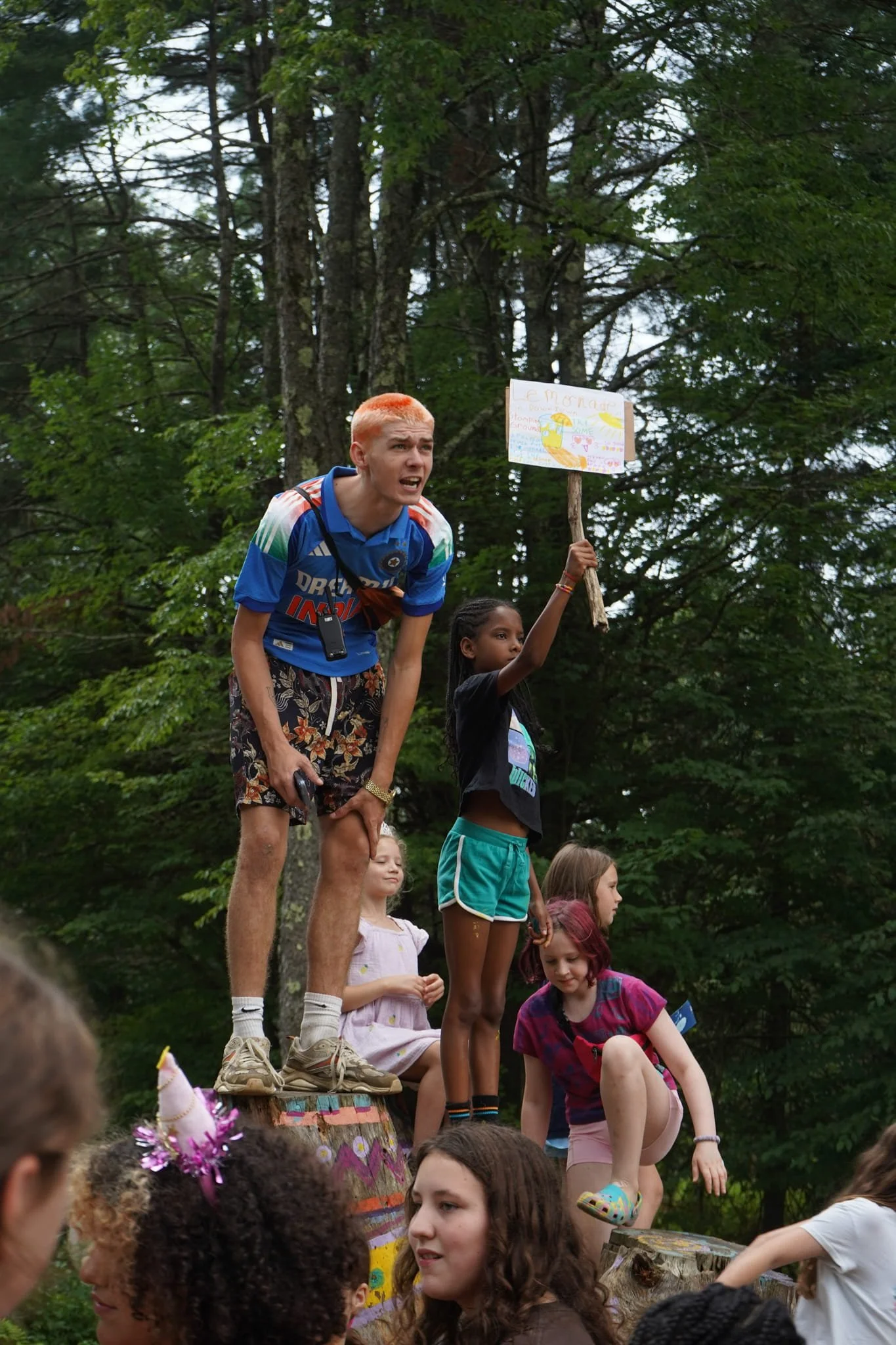
Reading this, I kept thinking about an ordinary day at camp. Kids choose their own schedule. They pick which Options to join, or decide to offer one themselves. They decide who to spend their free time with. When something goes wrong between them, they can call a circle and work it out together. None of these feel dramatic in the moment. But every single one is a small rep of the same lesson: my choices matter, and I can shape what happens to me and my community.
That’s not a side effect of our program. That is the program.
Self-Determination Theory
Peter also leans on Self-Determination Theory, which longtime friends of camp may recognize, because it’s woven all through our own Theory of Change. The idea is that humans thrive when three basic needs are met: autonomy (I get to direct my own life), competence (I’m good at things and getting better), and relatedness (I belong and people care about me).
I watch kids meet those needs for themselves every summer. A ten year old who crochets tiny animals ran an Option last year, and teenagers signed up to learn from her. She was the expert, and everyone in the room knew it. That’s competence and belonging in one small moment, and no adult designed it.
We’ve even seen this in research at camp. A 2024 study published in Conflict Resolution Quarterly found that campers’ empathy and perspective taking grew significantly over a two week session, and that on days when campers felt more in control of their choices, they reported higher empathy. Agency and empathy grow together.
Mostly, this book was a powerful reminder. There are very few places left where kids are trusted the way Peter describes. Camp is one of them, and we are lucky.
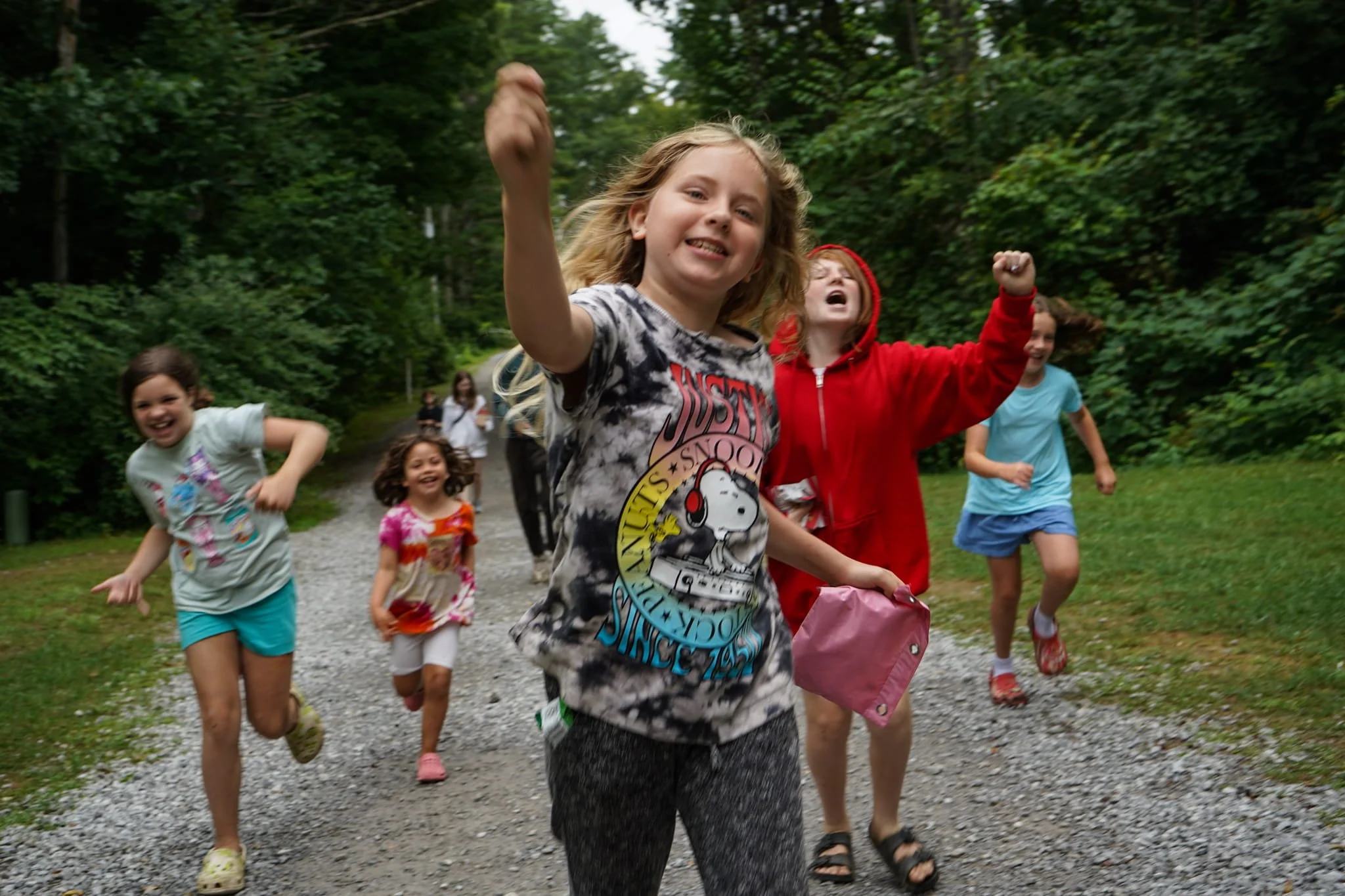
Yes, everything we do at Stomping Ground is grounded in developmental theory. But when you strip away the research and the vocabulary, it comes down to something simple. We let kids be kids. We give them time, space, a community that looks like the wider world, and adults who are there to hold the container rather than run the show. Then we get out of the way.
Restoring childhood beyond the summer
Peter ends the book with practical ways to bring real play back into kids’ lives, and I want to pass along a few of my favorites, plus some organizations doing this work in the places our camp families call home.
Ask your school about Let Grow Play Club. Peter developed it with Lenore Skenazy. It’s typically an hour of free, mixed age play before or after school, with adults acting as lifeguards rather than directors. Let Grow has a free guide for schools at letgrow.org/program/play-club.
Ask your library. Some libraries now host open, all ages free play. One in Austin, Texas sometimes has more than a hundred kids playing at once. If yours doesn’t, ask for it.
Visit an adventure playground. These are playgrounds full of loose parts, tools, and building materials, staffed by playworkers who keep an eye out for safety without directing the play. In New York City, play:groundNYC runs The Yard on Governors Island, free on weekends from spring through mid November. Near Boston, check out Adventure Play New England in Jamaica Plain. We keep a running list of adventure playgrounds around the country at campstompingground.org/list-of-adventure-playgrounds.
Bring the play to you. Pop-Up Adventure Play helps families and communities host temporary adventure playgrounds in parks, schools, and neighborhoods anywhere. A pile of cardboard, tape, and fabric goes a long way.
Find your people. In NYC, Society of Play (nyplays.org) is building imaginative, play based, inclusive spaces for kids. The Alliance for Self-Directed Education (self-directed.org) is a wonderful community for families who want to go deeper.
Start a play group. Gather a few families, find a park or backyard, include kids of different ages, and let the adults hang out somewhere else.
And if you want a gentle place to start, our free Grown-Ups Guide to Play is a little book about how play builds empathy, sparks joy, and fuels movements for a more just world. https://freeplayguide.com/
follow along with Peter’s active Substack https://petergray.substack.com/
Registration for summer 2027 opens Saturday, October 17 at 9 AM. https://stompingground.campbrainregistration.com/