Tamos pa las cosas que valgan la pena.
What the Super Bowl Halftime Show Reminded Me About Kids, Connection, and Camp
- ⁜ -
Every year, the Super Bowl brings with it more than just a football game.
Even for those of us who don’t really engage with sports, myself included (shoutout my fellow theatre kids), it is hard to avoid. Beyond the game itself, the Super Bowl includes a halftime performance. It is a massive cultural moment where a globally recognized artist performs in front of one of the largest audiences of the year. It is one of the few times when music, pop culture, and the internet all collide at once.
This year, that halftime performer was Bad Bunny.
For those unfamiliar, Bad Bunny is a Puerto Rican artist who performs primarily in Spanish. His work does not translate or soften itself for broader consumption. He centers Spanish as a language of belonging, not novelty. He celebrates Puerto Rican and Caribbean culture without turning it into a caricature. He plays with masculinity and self-expression in ways that challenge narrow ideas of who men, especially Latino men, are allowed to be. Much of his music is about joy, grief, love, and being alive, told plainly and without apology.
In the weeks leading up to the Super Bowl, I noticed the online discourse around his performance building. Jokes. Hot takes. Comments questioning whether people would understand him or why a Spanish-speaking artist belonged on such a big stage at all.
At first, I chalked it up to internet noise.
I have grown used to online spaces rewarding reaction over reflection. People lashing out for clicks, likes, and laughs. Everyone racing to be the funniest person in the room even if the cost is someone else’s dignity. Most days I scroll past it and move on.
But Sunday night, something shifted.
The comments hit harder. The racism felt louder. And I could not immediately explain why until I realized how close to home it had become.

Recently, I have been writing an impact piece for camp reflecting on the experience of a Spanish-speaking camper. A camper who arrived with limited English and every reason to stay quiet in a space not built for him and instead showed up fully. His presence asked more of us, more patience, more creativity, more listening. And in return he gave our community something powerful. Campers adapted. Staff grew. Language became something we leaned toward, not away from.
I watched eight and thirteen-year-olds show more empathy, curiosity, and care toward a seven-year-old navigating a new language than I have seen from adults online toward a grown artist on the world’s biggest stage.
That contrast stopped me cold.
The internet does not just allow hate. It often rewards it. Being quick matters more than being thoughtful. Being funny matters more than being kind. In that environment, racism gets reframed as humor. Cruelty gets dismissed as commentary. Impact disappears behind a screen.
Our kids are growing up with this!
They do not arrive at camp as blank slates. They arrive carrying ideas about power, humor, gender, race, and worth, many of which were shaped long before they ever met us. Sometimes those ideas show up as jokes that are not jokes. As confidence built on dominance instead of care. As language that excludes rather than connects.
And here is the part I wrestle with most: we don’t actually know how the world will shape our kids.
Every summer brings new influences. New language. New beliefs. We cannot predict what kids will be absorbing or which voices will be the loudest when they leave camp. That uncertainty is real and it is uncomfortable.
At the same time many of us are doing everything we can to keep kids safe. Laura has been reading The Anxious Generation which talks about how kids today spend far less time in discovery mode, less time experimenting, messing up, and repairing. We build guard rails because the world feels overwhelming and that instinct makes sense.
But the internet does not come with guard rails. It comes with volume.
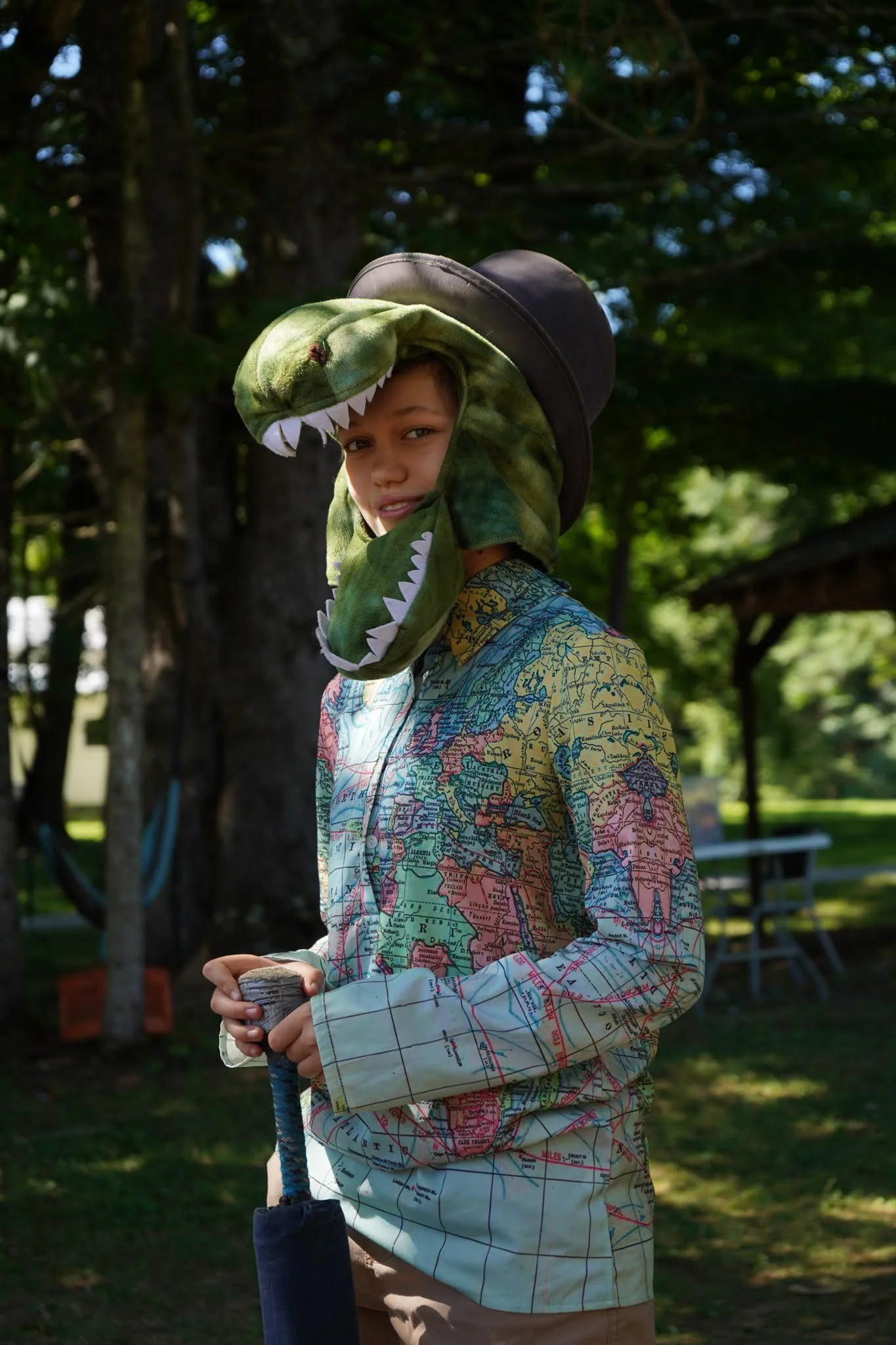
And that is where camp fits, not as a solution, but as a place to slow things down and practice something different. Stomping Ground has never been about preventing mistakes. It is about reflection, learning, growth, and trying again.
At camp, words land in real bodies. Jokes have impact. When something hurts, there is space to pause, talk, and try again. Camp does not erase the world kids come from, but it gives them a lived experience of something different.
Sometimes families ask, directly or indirectly, what a two week camp experience can really do in a world this big and this loud.
The honest answer is that we do not know exactly which moments will stick.
But we do know that camp gives kids a reference point. A memory in their body of what it feels like to belong without putting someone else down. A place where curiosity is rewarded, where repair is possible, and where power is not earned by being cruel or loud.
We cannot control what kids return to after camp. But together with families and staff we can offer them practice.
Practice choosing empathy over attention.
Practice listening instead of performing.
Practice joy that does not come at someone else’s expense.
Practice staying curious even when it is hard.
Your partnership is essential to everything that happens here.
When you send your child to Stomping Ground, you are trusting us with what matters most to you. Families are as important to the magic and impact of camp as campers and counselors. The trust you place in us and the conversations you continue at home give these lessons life beyond the bunk and the grove.
We do not know how to “fix” the internet. We do not know exactly how the world will shape our kids. But we do know that when families, campers, and staff approach the world together with humble curiosity, pausing, questioning, reflecting, and trying again, we give children tools to navigate complexity, to listen, and to act with empathy.
That is how change begins. Not perfectly, not instantly, but by practicing curiosity, courage, and care every single day. And sometimes, when we trust and believe in each other, that is enough to matter.
Curious about the title? It’s a line from Bad Bunny’s DtMF that translates roughly to ‘We’re here for what matters.’

Daniel is the Camp Director at Stomping Ground.
During the year, he connects with families and campers to welcome them into the fold and prepare them for summer. Daniel loves video games, movies, and being an all-around hype man.
Questions about registration? He’s your man.
daniel@campstompingground.org